
Sports orthopedist Vienna
An overview
ÜBERSICHT
MSV surgery - your specialists for musculoskeletal injuries
Sports enthusiasts know that injuries in the field of sport can not only be painful, but also frustrating. Whether amateur runner or professional athlete, no one is immune to injury. This is the moment when a sports orthopaedist comes into play – for all those who are looking for a quick return to an active, pain-free life.
As a specialist in orthopaedics and traumatology with a specialization in trauma surgery and sports traumatology, I offer you modern treatment methods and comprehensive care for all musculoskeletal problems. In my practice in 1030 Vienna, my team and I take care of clarification, diagnostics, therapy and long-term regeneration.
Dr. Gustav Timmel - Your point of contact for sports orthopaedics in the center of Vienna
Sports orthopaedics deals with all injuries, overuse injuries, wear and tear and pain conditions that occur during or after sport - whether due to trauma or long-term strain. In addition to acute treatment, we attach great importance to long-term rehabilitation, in close cooperation with therapists, sports physiotherapists, osteopaths and, in some cases, targeted massage. Our aim is to give you back your full movement, strength and quality of life.
MY SERVICES - Treatment for various sports injuries
Cruciate ligament rupture
Conservative therapy
Cruciate ligament preserving surgery
Cruciate ligament reconstruction

Shoulder dislocation
Traumatic shoulder dislocations,
Hill Sachs dent,
Bipolar bone defects
Professional athletes, amateur athletes, sport in old age
Due to the achievements of the last decade in orthopaedics and trauma surgery, specialization has become unavoidable. Only through such specializations can a doctor offer his offer patients offer patients the best possible treatment using the latest science and technology.
The care of patients in competitive sports in competitive sports requires special expertise
Top athletes are under enormous physical pressure. Intensive training sessions push the body to its limits, often resulting in overuse injuries or acute injuries. Early clarification by an experienced specialist in sports traumatology is crucial here in order to avoid lasting problems and maintain athletic performance.
Amateur athlete are usually very busy at work and only train irregularly. The combination of ambition, too little regeneration and inadequate preparation increases the risk of complaints and overuse syndromes. Individual advice from a sports orthopaedist is often the first step towards a suitable solution.
In old age sport becomes a source of joie de vivre and health. Exercise strengthens muscles, bones and joints – but can also lead to wear and tear. Modern orthopaedics offers numerous treatment methods to identify and treat age-related problems at an early stage – be it through targeted sports physiotherapy, massage or osteopathy.
The worst thing for professional and amateur athletes alike is having to give up their beloved sport. Early assessment by an experienced sports orthopaedist or sports traumatologist helps to treat pain in good time before it becomes a permanent problem.
The diagnosis is only the first step. Whether conservative or surgical – the path back to sport can only be achieved through close cooperation with physiotherapists. They take on central tasks in rehabilitation: the compensation of muscular imbalances, the correction of incorrect posture or post-operative follow-up treatment. Without them, sustainable regeneration is hardly possible.
Sport-specific injuries
Most sports orthopaedists are athletes themselves and can therefore empathize well with the athletes. The immediate proximity to individual sports and the “know-how” of sport-specific injuries is usually due to the fact that the doctor has practiced this sport himself or has many years of experience with athletes of these sports. In each type of sport, different joints are subjected to different levels of stress or are at different levels of risk. Detailed knowledge of movement sequences, the physiology of the joints and the frequency of individual injuries help the trained sports orthopaedist to make the correct diagnosis at an early stage and thus minimize the duration of the training absence.
Football, alpine skiing, ball sports and cycling are the sports responsible for the most sports injuries in Austria. Every year, more than 30,000 winter sports enthusiasts injure themselves so badly while skiing and snowboarding that they have to be treated in hospital. According to the Austrian Road Safety Board (KFV), up to 50,000 footballers are injured in one year. In most cases, injuries in these sports occur in the lower extremities (= area from the hip to the toes).
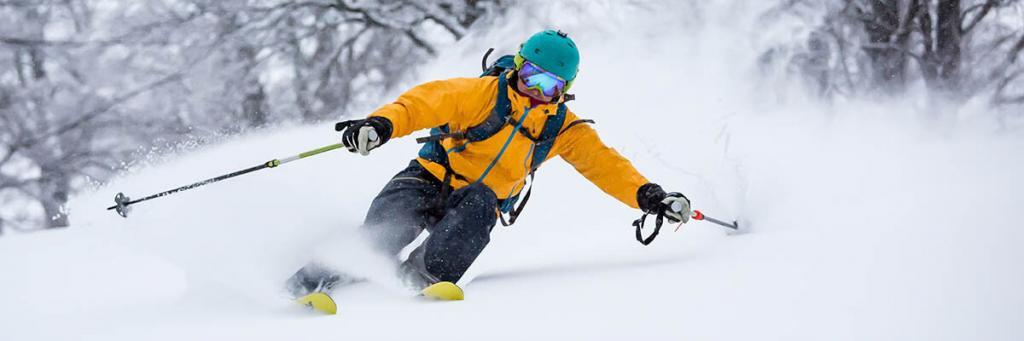
Skiing
Soccer
Beach volleyball
Skiing
The development of carving skis for hobby skiers has significantly increased the risk of injury, especially to the knee joint. The classic rotational trauma is particularly feared. Increased rotation, usually in a supine position (center of gravity behind the binding), causes a cruciate ligament injury. This is also often associated with an inner ligament injury and a meniscus tear (=terible triad).
The shoulder joint is also quite frequently affected. Shoulder dislocations, acromioclavicular joint dislocations (AC joint dislocation) or fractures frequently occur here.
A lack of fitness and coordination in combination with icy, aggressive artificial snow slopes are a major risk for amateur athletes. It is therefore advisable to prepare sufficiently before a ski season, as prevention is better than any treatment after an injury has occurred.
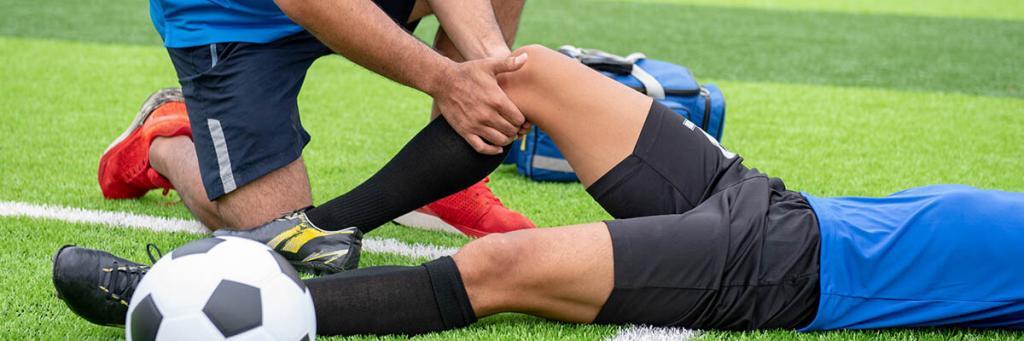
Soccer
As football is one of the most frequently practiced sports, the risk of suffering an injury is the highest in percentage terms. Due to high dynamic changes of direction, contact with opponents, short aggressive sprints and high physical strain, there are a large number of injury possibilities in football.
More than 2/3 of all injuries are caused by direct trauma and only 1/3 are due to overuse. Muscle injuries account for 1/3 of all football injuries.
Injuries that occur through contact with opposing players are very often cruciate ligament ruptures due to rotational trauma, ankle injuries or thigh contusions.
Consistent prevention programs that are incorporated into training have been proven to reduce the risk of cruciate ligament injuries and muscle injuries.
Beach volleyball
Ankle injuries usually occur during loading due to ankle twisting trauma (supination trauma) after a block or an attack.
The risk of a knee joint injury is around 20-30%. Cruciate ligament injuries, meniscus injuries and medial ligament injuries are also typical injury patterns in beach volleyball due to rotational trauma.
Shoulder dislocations and other shoulder injuries usually occur during diving for fish. Overuse syndromes of the shoulder, such as thrower’s shoulder or pitcher’s shoulder, overuse of the long biceps tendon and bursitis are common.
Runners Knee
(ITB syndrome, friction syndrome): Must always be considered in the differential diagnosis of lateral knee pain. This is an inflammation of the bursa between the femur (femoral condyle) and a fascial cord (iliotibial tract). Occurs more frequently in runners and cyclists, especially in patients with bow legs who also put the outer edge of the foot on while running. Therapeutically, in addition to stretching exercises and anti-inflammatory local and oral therapy, attention must also be paid to the correct footwear.
Jumpers knee (patella tip syndrome)
Patella tip syndrome results from overloading the extensor apparatus. It often occurs with positive and negative acceleration at the knee joint, such as in tennis, basketball, volleyball or other jumping sports. It is treated with local or oral administration of anti-inflammatory medication, but primarily with physiotherapy: transverse frictions, stretching of the extensor apparatus and restoration of the muscular imbalance. Taping and patellar tendon bandages prevent excessive tension at the tendon insertion.
Achilles tendon rupture
Achilles tendon ruptures usually occur a few centimetres above their attachment point, at the heel bone, where the blood supply to the tendon is at its worst. The acute injury is often described as a pop or noticeable tear. Clinically, a clear dent can be felt in the area of the tendon. Ultrasound can be used to determine the distance between the torn ends of the tendon, which is a decisive factor in determining whether surgery is necessary or whether conservative treatment is possible. Surgery is generally recommended for athletes.
Shin Spint
Usually referred to in medicine as MTSS (medial tibial stress syndrome) and describes a common overuse syndrome that frequently occurs in runners. It is a periostitis (periosteal irritation) caused by excessive tensile stress on the following muscles: tibialis posterior, flexor digitorum longus and soleus. Since overpronation is a risk factor and the posterior tibialis muscle plays a major role in both increased pronation and the development of “shin splint syndrome”, special attention must be paid to the position of the foot during treatment. The therapy is as follows: Training break, local cooling in the acute stage, tape bandages, physiotherapy, correct choice of sports shoes, stretching exercises
All of these injuries can be treated with targeted training management, manual therapies such as osteopathy, massage, counseling The right choice of shoes and structured rehabilitation programs can be treated well. This means that nothing stands in the way of returning to your beloved sport, whether as a hobby or professional athlete!