You run to the ball, perhaps turn to look at your opponent and suddenly you hear a loud crack in your knee. Seconds later, you feel severe pain and swelling: A torn cruciate ligament has been diagnosed. Particularly in soccer, but also in other sports involving abrupt changes of direction and constant stop-and-go movements, rupture of the anterior cruciate ligament is one of the most common serious injuries.
But as big a shock as it may be at first, a cruciate ligament rupture no longer means the end of your sporting ambitions. Thanks to modern sports medicine and structured rehabilitation programs, the way back onto the pitch – the so-called “return to play” – has become safer and easier to plan than ever before.
In this article, you will find out what really matters after an injury. From the right initial treatment on the pitch to the decision for or against surgery and a concrete roadmap for your comeback.
Briefly explained: What is the function of the cruciate ligament in the knee?
Before we look at your way back into sport, a quick look at the anatomy: you can think of the anterior cruciate ligament as the central stabilizer of your knee joint. It connects the upper and lower leg and ensures that the joint does not become unstable under load.
- The function: It prevents the lower leg from slipping forwards and stabilizes the knee, especially during rotational movements.
- The injury: In soccer, it usually happens without direct contact with the opponent - for example, in the event of an unfortunate landing or an abrupt change of direction where the foot gets caught in the turf.
- The goal: After a tear, the natural stability is lost for the time being. Whether through surgery or targeted training - the aim is always to restore full resilience for everyday life and sport.
First aid on the pitch: What to do after the "bang"
A cruciate ligament rupture is often announced by a distinct tearing or popping sound, followed by an unstable feeling in the knee. Even if the initial pain sometimes subsides quickly, the right reaction in the first few minutes is crucial to limit swelling and consequential damage.
The PECH rule as an immediate aid
Immediately after the injury, you should act according to the tried and tested PECH scheme. These four steps are the most effective initial measures while still on the pitch or in the dressing room:
- P - Break: Stop the game immediately. Even if you think you can "still run smoothly" - any further strain can aggravate the injury.
- E - Ice: Cool the knee as quickly as possible for about 15 to 20 minutes. This relieves the pain and prevents the joint from swelling too much. Important: Do not place the ice directly on the skin (risk of injury!).
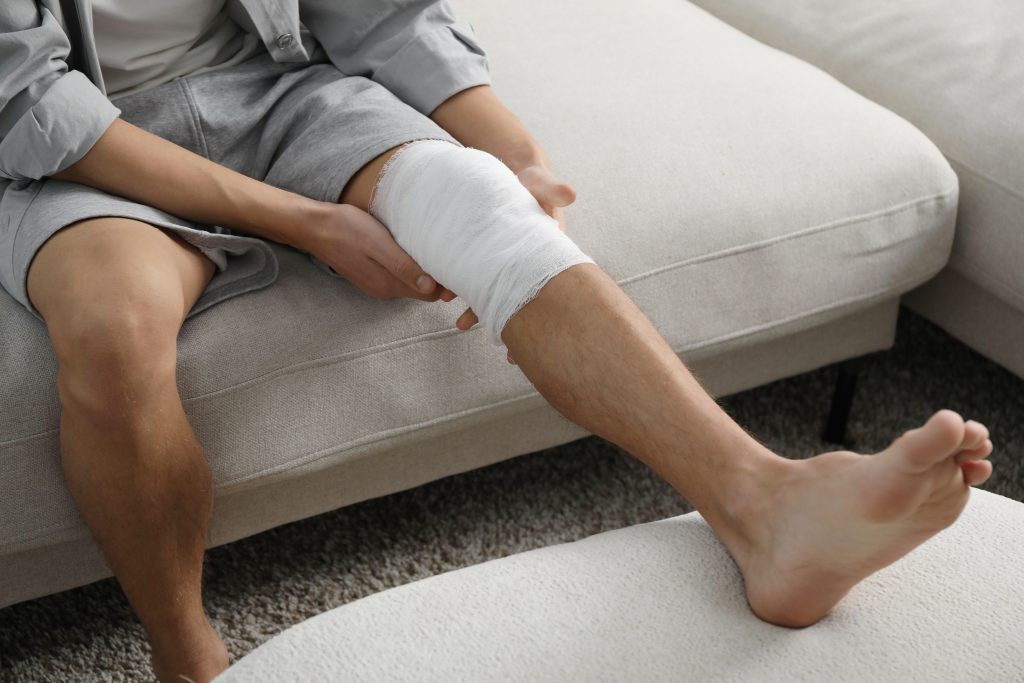
- C - Compression: A light pressure bandage helps to control the bleeding in the joint.
- H - elevation: Position the leg above heart level. This supports the drainage of fluid and reduces the pressure in the knee.
Why a diagnosis from a specialist is crucial now
Even if the swelling subsides after a few days, a cruciate ligament rupture is not an injury that can be “sat out”. A professional diagnosis by a specialist orthopaedic surgeon is essential for two reasons:
- 1. exclusion of concomitant injuries: In the event of a cruciate ligament rupture, the menisci or cartilage are often also affected. This damage must be recognized early in order to avoid long-term consequences such as osteoarthritis.
- 2. individual strategy: Not every tear needs to be operated on immediately. A specialist can use clinical tests and an MRI to assess how stable your knee still is and whether a conservative approach or surgery makes more sense for your sporting goals.
The big question: Do I need an operation to play soccer again?
After the diagnosis, the most important decision has to be made. Many patients worry that a cruciate ligament rupture automatically means the end of their time on the pitch. The good news is that there are now very successful ways to return to sport – but the decision for or against surgery is always a case-by-case decision.
Conservative vs. surgical - a decision-making aid for amateur footballers
Whether an operation is necessary depends primarily on your age, your activity level and the stability of your knee.
- The surgical route: For active footballers, surgery (cruciate ligament replacement surgery) is usually advised. As soccer is a "stop-and-go sport" with unpredictable rotational movements, the new ligament provides the necessary mechanical stability to protect the knee from further damage to the meniscus and cartilage.
- The conservative way: If the knee is stable in everyday life and you are prepared to give up contact sports such as soccer (and prefer cycling or swimming instead, for example), targeted physiotherapy without surgery may be sufficient. In this case, the muscles take over the securing of the joint.
The decisive factor is: does the stability of the knee match your sporting ambitions? An unstable knee when playing soccer almost always leads to consequential damage in the long term.
Why "Prehab" (training before the operation) accelerates your recovery
If you decide to have an operation, the time before the procedure is just as important as the time afterwards. In modern sports medicine, we rely on so-called “prehab” (prehabilitation).
The aim is to go into surgery with a fit knee. That means:
- Reduction of swelling: A joint that is as free of irritation as possible is easier to operate on.
- Mobility: The knee should be able to be extended and flexed well before the procedure.
- Muscle maintenance: The more muscle you maintain or build up before the operation, the faster you will regain your strength afterwards.
A strong quadriceps is like an insurance policy for your knee – the more substance there is, the shorter the path back onto the court is often.
Comeback timetable: The phases of physiotherapy
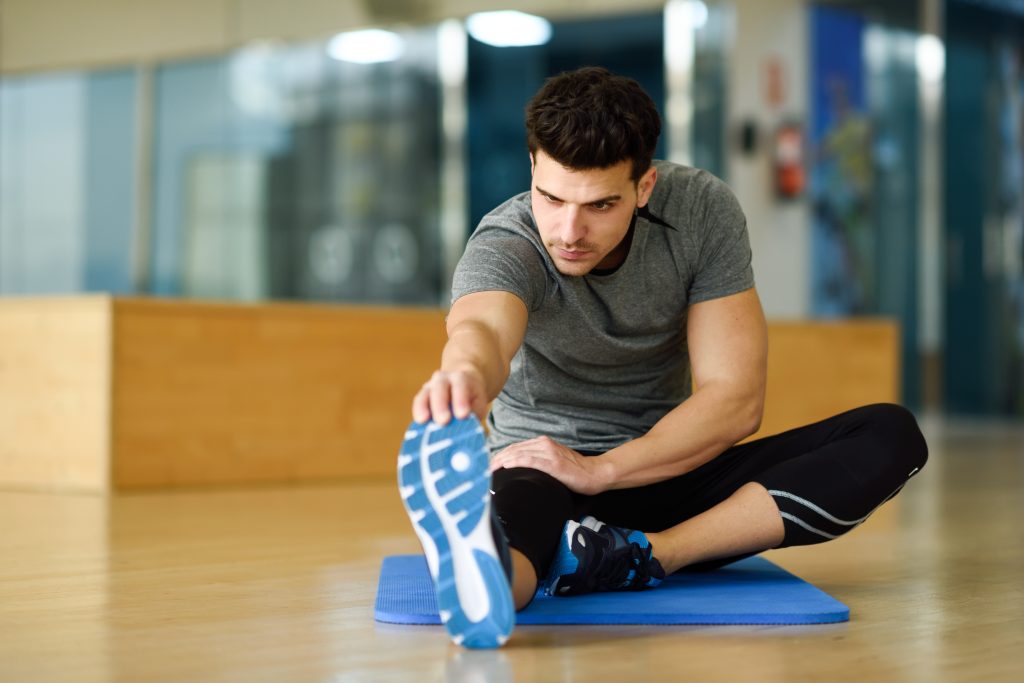
Patience is your most important virtue after cruciate ligament surgery. The body needs time for the new transplant to heal biologically. Rehabilitation follows a clear step-by-step plan that takes you from the treatment room back onto the pitch.
Phase 1: Decongestion and daily routine (week 1-4)
In the first few weeks after the procedure, the focus is on taking it easy, but without lapsing into complete inactivity. The primary goal is to allow the knee to rest.
- Focus: Reduction of swelling (lymphatic drainage) and pain relief.
- Movement: First careful exercises to regain extension and flexion.
- Everyday life: Gradually moving away from walking aids and restoring a clean gait pattern are the milestones here.
Phase 2: Strength building and proprioception (weeks 5-12)
As soon as the knee is stable and largely pain-free in everyday life, active work begins. This is where you lay the foundation for your later return to soccer.
- Strength training: Targeted development of the thigh and gluteal muscles to actively relieve the joint.
- Proprioception: This is the training of deep sensitivity. Through balance exercises (e.g. on spinning tops or wobble boards), your brain learns to control the knee again at lightning speed in unstable situations.
- Endurance: Light training on the ergometer is usually possible again during this phase.
Phase 3: Jogging and soccer-specific training (from month 4)
If the strength values are right and the doctor gives the green light, the training becomes more dynamic. Now we prepare the body for the special stresses of soccer.
- Running ABC: We start with linear jogging on flat ground and slowly build up to interval sprints.
- Change of direction: First typical soccer movements such as slalom runs or light jumping exercises are integrated.
- Ball work: The first technical exercises with the ball on the foot - initially without pressure from the opponent - ensure that the feeling for the ball returns.
Mental strength: conquering the fear of the next duel
A cruciate ligament rupture is not only a physical challenge, but also a mental one. Many footballers know the feeling: the knee is stable according to the doctor, but the scene of the injury keeps replaying in your head.
The fear of re-injury is completely normal. In order to play freely again, confidence in your own body must gradually return.
- Acceptance: Take the time to acknowledge the uncertainty at the beginning.
- Visualization: Mental training can help. Imagine successful movement sequences before you perform them on the court.
- Safety through testing: Objective data helps to combat subjective fear. If you can see in black and white that the strength values of both legs are almost identical, this gives you the confidence you need for the first duel.

Return to Sports: When are you allowed back on the pitch?
The biggest mistake many amateur footballers make is starting team training too early. Just because jogging is pain-free doesn’t mean the knee is ready for the unpredictable movements in a game.
The checklist for returning to team training
The following criteria should be met before you return to work:
- No pain: No pain during soccer-specific exertion or the day after.
- Symmetry: The strength of the thigh muscles of the operated leg should reach at least 90 % of the strength of the healthy leg.
- Stability tests: You should be able to complete one-legged jump tests safely and in a controlled manner.
- Medical OK: Final approval after a clinical examination is essential.
Prevention: How to prevent a second "out"
After a cruciate ligament rupture is before prevention. To minimize the risk of re-injury (or a tear on the other side), a specific warm-up program is now a fixed part of your daily routine.
- Stability training: keep at it! Twice a week, 15 minutes of targeted training for the core and leg axis work wonders.
- Neuromuscular training: Exercises such as the "FIFA 11+" program have been specially developed to prevent cruciate ligament ruptures in soccer.
- Footwear: Pay attention to the pitch conditions - too much grip on dry artificial turf can unnecessarily increase the shearing forces in the knee.
A cruciate ligament rupture no longer means the end of your career. With the right combination of medical expertise, consistent physiotherapy and the necessary patience, your chances of getting back on the pitch soon are very good. Do you have any questions about your individual healing process? Arrange a consultation in our practice.