Image: AI-generated
Pectoralis Tear: Tear of the Pectoralis Major Muscle
A pectoralis tear is a rupture of the large chest muscle (musculus pectoralis major)—usually at the tendon, where the muscle attaches to the humerus. A typical trigger is a sudden, off-axis load on an extended, outwardly rotated arm, most commonly during the bench press. It primarily affects men between the ages of 20 and 40 who participate in strength and contact sports.
In cases of complete tendon tears, surgical repair within a few weeks is the procedure that yields the best functional outcomes. Prompt evaluation is therefore crucial.
Suspected pectoralis tear? A clinical examination and imaging should be performed within a few days. Schedule an appointment now!
OVERVIEW
What is a tear of the pectoralis major muscle?
The pectoralis major muscle is the large, fan-shaped chest muscle. It originates at the clavicle, the sternum, and the upper ribs, and inserts into the humerus via a strong, two-layered tendon. Its main functions are to bring the arm toward the body (adduction), to rotate the arm inward, and to bring the arm forward.
If this muscle-tendon complex tears, it leads to a significant loss of strength, particularly during adduction and internal rotation.
In well-trained individuals, the asymmetry is usually more clearly visible because the well-developed muscles on the healthy side create a stronger contrast.
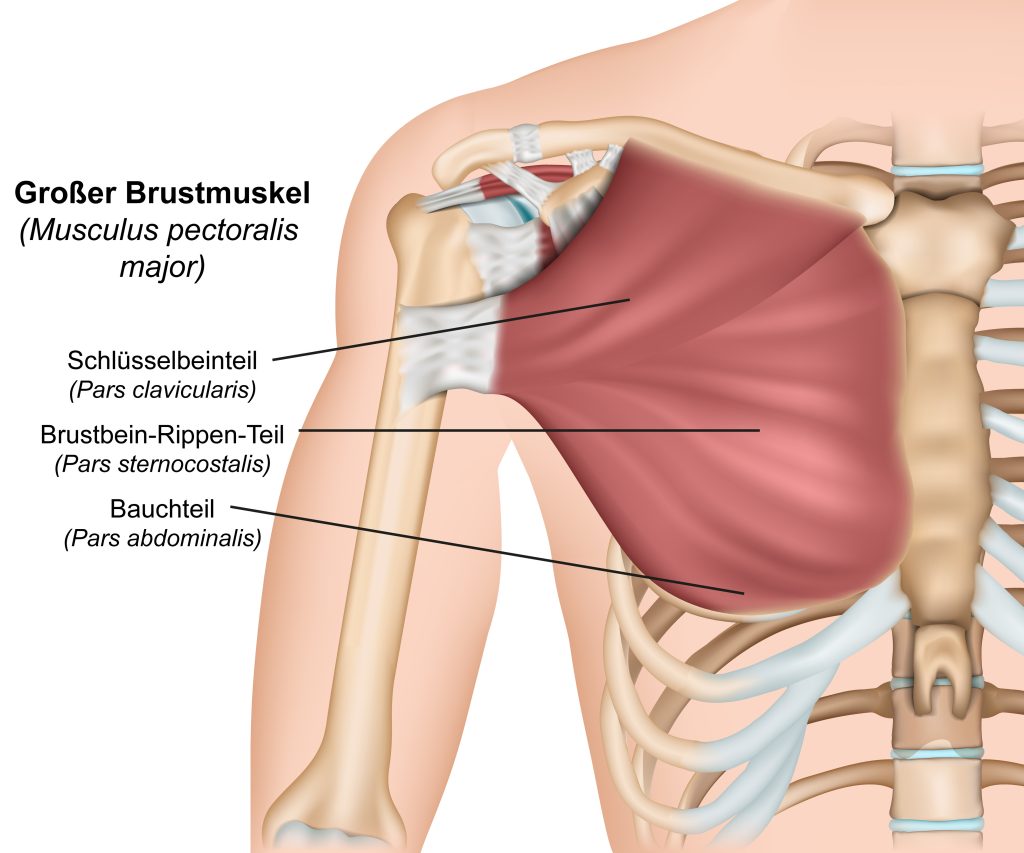
Where exactly does the chest muscle tear?
| Rissort | Häufigkeit | Behandlungstendenz |
|---|---|---|
| Sehnenansatz am Oberarmknochen | häufigste Lokalisation | meist operativ |
| Muskel-Sehnen-Übergang | seltener | abhängig von Ausmaß und Anspruch |
| Muskelbauch | selten | überwiegend konservativ |
| Knöcherner Ausriss am Oberarm | sehr selten | operativ |
How does a pectoralis tear occur?
The typical mechanism involves eccentric loading: the muscle is stretched against resistance while simultaneously being maximally contracted. In the bench press, this occurs at the lowest position of the barbell—the point of maximum tendon tension.
Common Triggers
- Strength Training: Bench press with heavy weights, especially during the final phase of the downward movement
- Wrestling, Judo, Rugby, American Football: Contact with an opponent while the arm is abducted
- Fall onto an arm extended backward
Known risk factors: anabolic steroids, rapid increases in training intensity without an adaptation phase, pre-existing tendon damage, and inadequate warm-ups.
What symptoms indicate a torn chest muscle?
The tear is almost always noticeable at the moment of injury: an audible or palpable tearing sensation, followed by sudden, sharp pain in the front of the shoulder and chest.
Typical signs as the condition progresses:
- Bruises on the chest, armpit, and upper arm, often not visible until 24–72 hours later
- Swelling in the front of the shoulder
- Visible asymmetry: The anterior axillary fold is missing or flattened, and the breast contour appears uneven on both sides—particularly noticeable when tensing the muscles against resistance
- Loss of strength when bringing the arm forward and during internal rotation
- A noticeable indentation between the muscle and the humerus
When should you seek immediate medical attention?
If there is an audible tear, immediate loss of strength, and a visible difference in leg length, an evaluation should be conducted within a few days. The reason: In cases of complete tendon tears, surgery performed in the acute stage is technically easier and functionally more successful than a delayed reconstruction.
How is a pectoralis tear diagnosed?
The diagnosis is based on three steps:
- Clinical examination —comparison of both sides at rest and under tension, examination of the anterior axillary fold, strength testing in adduction and internal rotation, palpation of the tendon course.
- Ultrasound —dynamic assessment, available immediately in the office, well-suited for an initial evaluation.
- MRI – The standard method for accurately determining the location of a tear, its extent (partial vs. complete tear), and tendon retraction. It forms the basis for surgical planning.
An X-ray is used as a supplementary test to rule out a bone fracture.
Key point: A partial tear and a complete tendon rupture cause similar symptoms but require different treatments. The distinction can be reliably made only through imaging.
When is conservative treatment used, and when is surgery performed?
This question cannot be answered based on the circumstances of the injury, but only on the findings. The evaluation takes place at the office of Dr. Gustav Timmel, MD, at the MSV Medical Center in Vienna—beginning with an initial clinical examination.
During this appointment, the arm is examined for asymmetry, the anterior axillary fold is assessed, and strength in adduction and internal rotation is tested, supplemented by an ultrasound examination. This will determine whether there is a partial tear or a complete tendon tear and whether an MRI is necessary to precisely identify the location of the tear and the extent of tendon retraction.
The decision on a treatment method is then made during the discussion of the findings—together with the patient and based on the following criteria:
- Type and Location of Tear— Partial tear, complete tendon tear, or avulsion fracture
- Time since the injury— determines whether immediate re-fixation is still possible
- Athletic and Professional Demands – Strength and contact sports present different challenges than the physical demands of everyday life
- Age and Pre-existing Conditions
As a general guideline: Complete tendon tears at the upper arm insertion are treated surgically in patients who are physically active. Partial tears and tears within the muscle belly can usually be treated conservatively.
Conservative treatment includes immobilization, measures to reduce swelling, and a structured physical therapy program to gradually increase activity levels.
How is the surgery performed?
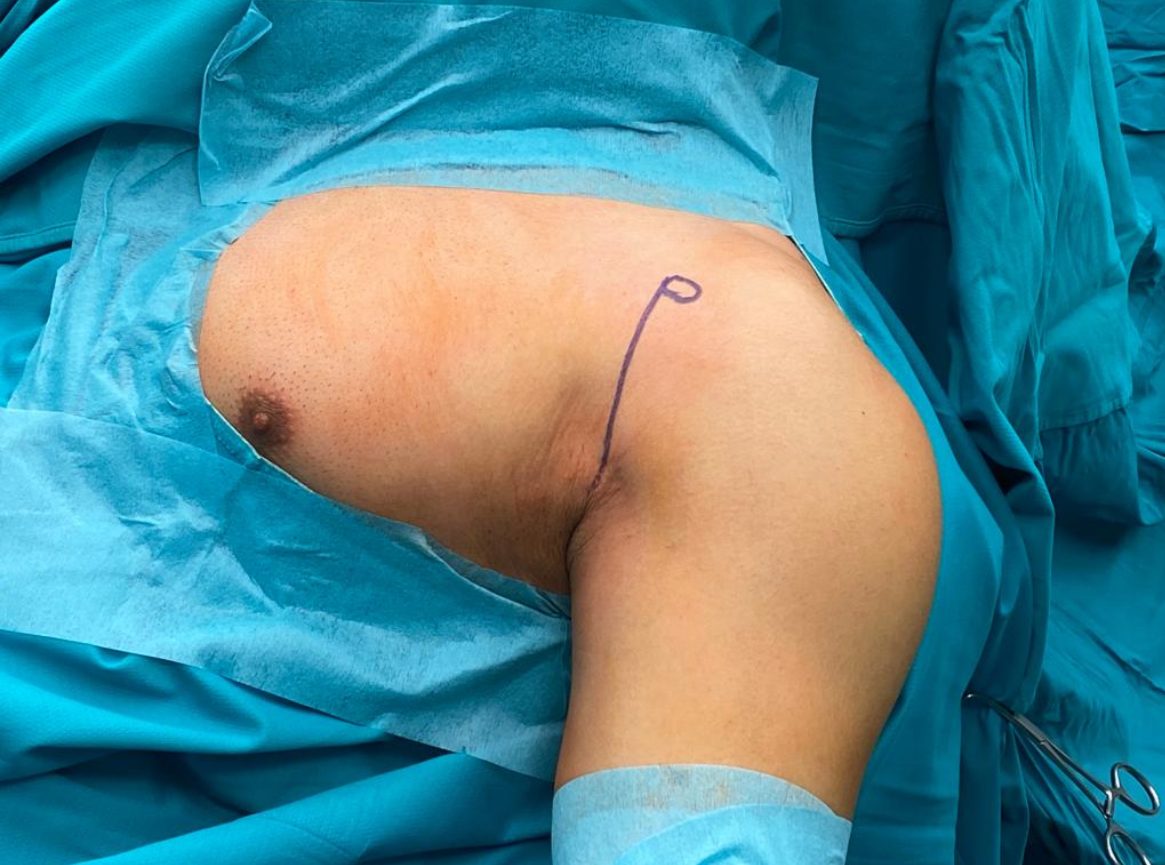
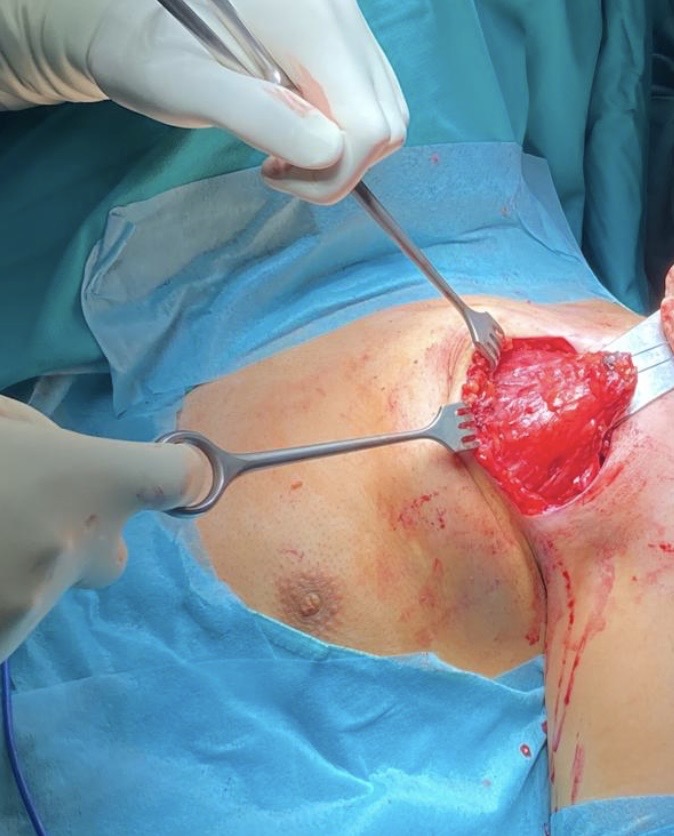
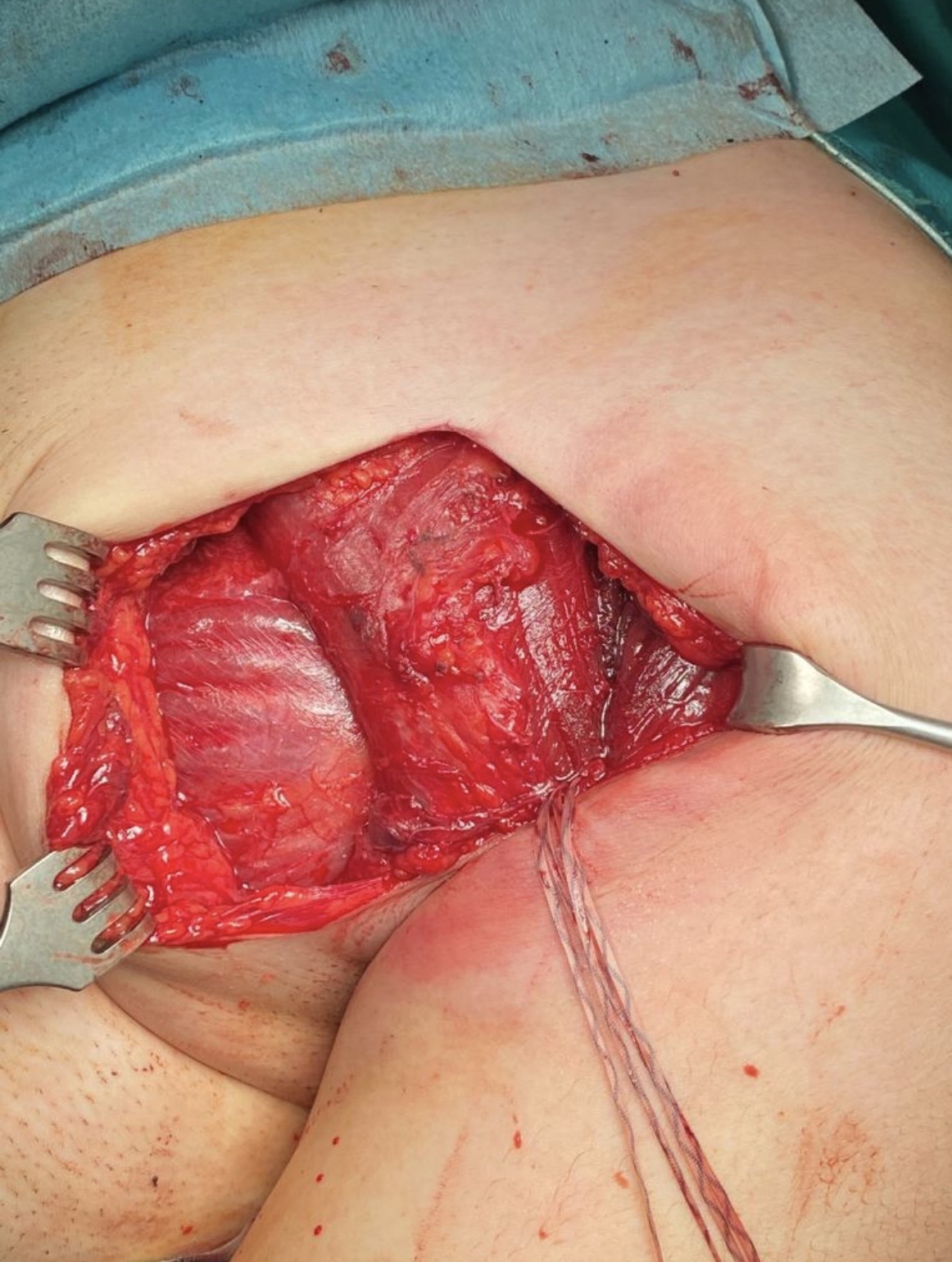
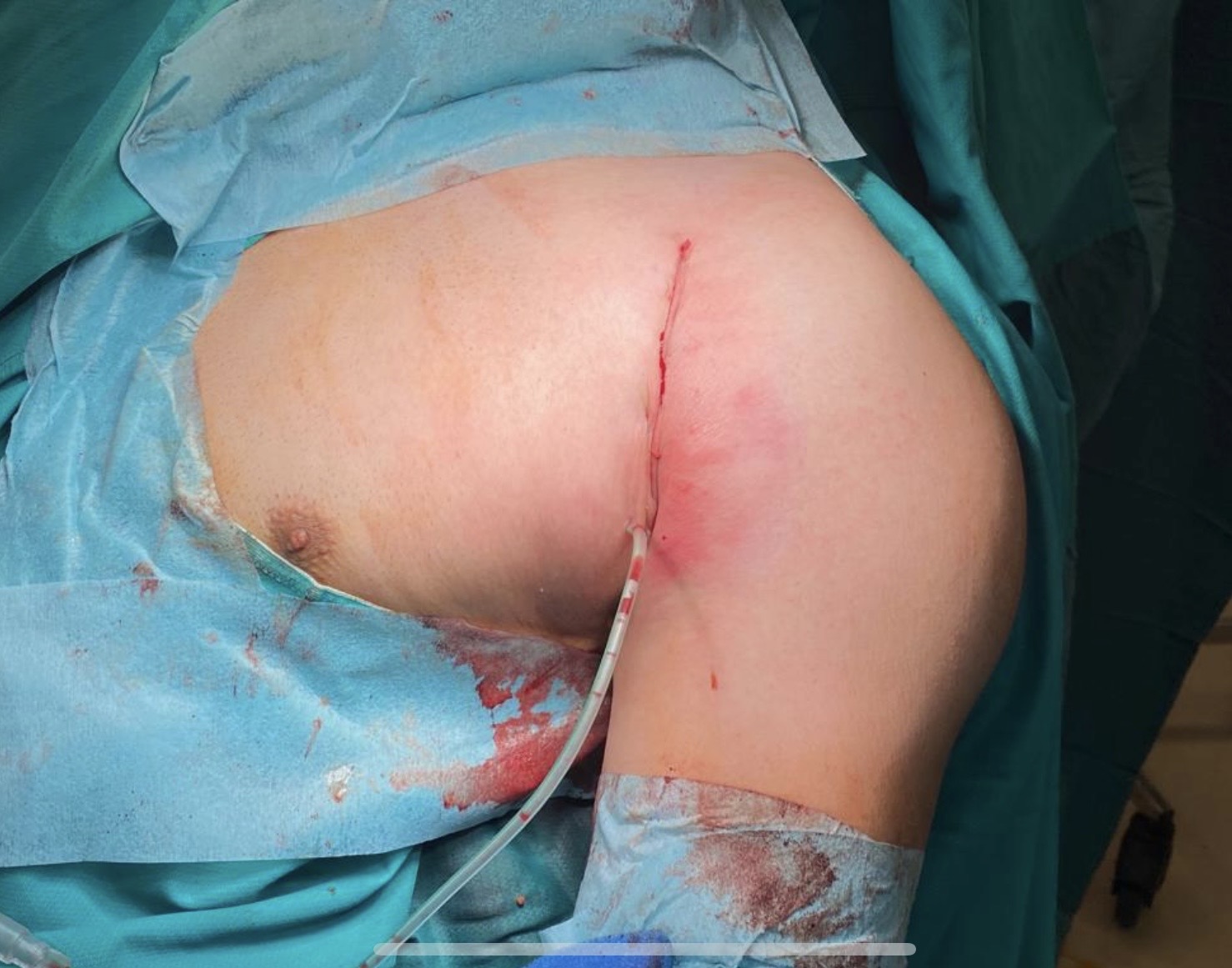
During reattachment, the torn tendon is reattached to its original insertion point on the humerus—using suture anchors or transosseous sutures. Access is gained through an incision in the area of the anterior axillary fold.
If the tear is older and the tendon has already retracted and scarred over, direct reattachment may no longer be possible. In this case, reconstruction using a tendon graft is necessary—a more complex procedure. This is the medical reason why early diagnosis is so important.
The initial examination, discussion of test results, and all follow-up care take place at the office in the MSV Medical Center, Invalidenstraße 11/2a, 1030 Vienna. The specifics of the surgery will also be discussed there.
How long does it take to recover from a pectoralis tear?
After surgical treatment, it usually takes about 6 months to regain full athletic capacity; for strength training with maximum weights, it can take up to 9–12 months. The process is divided into phases:
| Phase | Zeitraum | Empfehlungen |
|---|---|---|
| Schutzphase | Woche 0–6 | Ruhigstellung in der Schlinge, passive Bewegung in definierten Grenzen, keine aktive Adduktion oder Innenrotation gegen Widerstand |
| Mobilisation | Woche 6–12 | schrittweise aktive Bewegungserweiterung, isometrisches Training |
| Kraftaufbau | ab Monat 3 | progressiver Widerstandsaufbau unter physiotherapeutischer Führung |
| Sportspezifik | ab Monat 4–6 | sportartspezifische Belastung, Rückkehr in Kontaktsport nach Freigabe |
| Volle Belastung | ab Monat 6–9 | Bankdrücken mit hohem Gewicht, Wettkampfbelastung |
What happens if a pectoralis tear is left untreated?
An untreated complete tendon tear does not heal in its original position. This results in a permanent loss of strength in adduction and internal rotation, visible asymmetry of the chest contour, and—depending on athletic demands—a significant decline in performance. Although the pain subsides, function does not fully return.
Reconstruction at a later stage remains possible, but it is more technically complex and yields less predictable results than early refixation.
Treatment for Osteoarthritis (OA) by Dr. Gustav Timmel in Vienna
Dr. Gustav Timmel, MD, is a specialist in orthopedics and traumatology with a focus on sports injuries. He heads the sports clinic at the Floridsdorf Hospital.
Treatment Procedure
- Initial consultation at the MSV Medical Center, Invalidenstraße 11/2a, 1030 Vienna—clinical examination and ultrasound
- Imaging – MRI to Confirm the Diagnosis and Determine the Extent of the Tear
- Discussion of Findings – Deciding Between Conservative or Surgical Treatment, Together with the Patient
- Surgery – when surgery is indicated at the Floridsdorf Clinic
- Follow-up Care – Checkups and Rehabilitation Management Back at the Clinic
FAQ
How can I tell if I've torn a chest muscle?
Typical symptoms include an audible tearing sound at the moment of injury, immediate sharp pain, bruising on the chest and upper arm after one to three days, and an absent or flattened anterior axillary fold when comparing both sides. Only imaging can provide a definitive diagnosis.
Does a pectoralis tear always require surgery?
No. Partial tears and tears in the muscle belly are usually treated conservatively. Complete tendon tears at the insertion on the upper arm are surgically repaired in active patients because this is the only way to largely restore strength.
How soon does the surgery need to be performed?
Treatment during the acute phase yields better results because the tendon can still be reattached directly. If the tendon has retracted and scarred, reconstruction using a graft is often necessary.
When can I start bench pressing again after pectoralis surgery?
Bench pressing with heavy weights is generally only possible after 6 to 9 months, depending on the healing process and a doctor’s clearance.
Can a pectoralis tear heal on its own?
A complete tendon rupture does not heal in its original position. This results in a loss of strength and visible asymmetry.
Who is particularly at risk?
Men between the ages of 20 and 40 who participate in strength and contact sports. The bench press is by far the most common cause of injury. Anabolic steroids increase the risk.